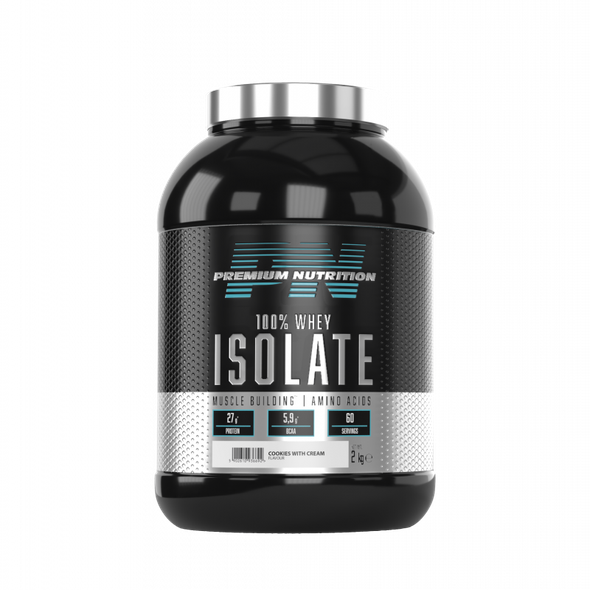
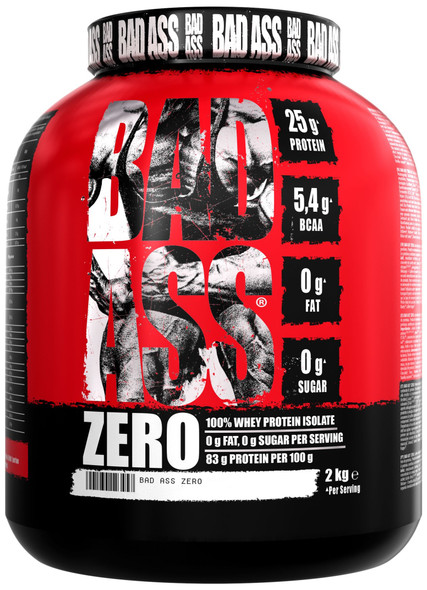
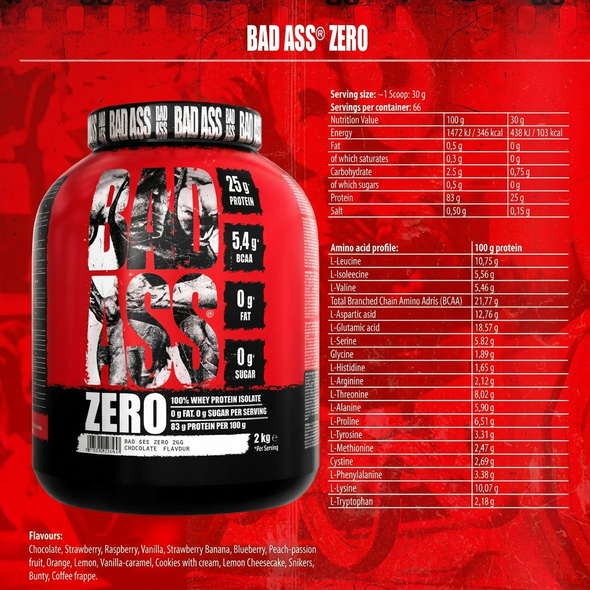
Whey isolate is whey that has been filtered further, so each scoop carries more protein and less fat, sugar and lactose than a standard concentrate. Choose from Premium Nutrition PN 100% Whey Isolate, BAD ASS Zero Isolate and Trec Nutrition Isolate 100, all suited to lean, macro-counted diets.
Isolate or concentrate?
Whey concentrate is usually 70–80% protein; isolate goes through extra filtration to reach around 90%, removing more of the lactose, fat and carbohydrate. That extra step is why isolate costs more. It makes most sense when you are counting every gram on a cutting diet, or when a standard shake sits heavily with you. If neither applies, a whey concentrate gives the same protein claims for less money. Protein contributes to a growth in muscle mass and to the maintenance of muscle mass, whichever form you choose.
Our isolates compared
- PN 100% Whey Isolate 2kg: 25 g protein per serving and about 66 servings, in Chocolate, Strawberry Banana and a Snickers-style flavour.
- BAD ASS Zero Isolate 2kg: 25 g protein per serving, listed as sugar-free, fat-free and lactose-free, in Strawberry Banana; also about 66 servings.
- Trec Nutrition Isolate 100: 700 g or 2000 g jars in six flavours including Creamy Blueberry and White Chocolate, with ultra-low sugar.
Mix one scoop with about 250 ml of cold water or milk, as the labels direct. Isolate mixes thinner than concentrate, so it also stirs easily into porridge or yoghurt. Not sure which to pick? Choose by flavour first, because both 2 kg tubs give the same 25 g of protein per serving. Want a dairy-free alternative with a clear, juice-style texture? Try 10X Athletic Clear Beef Isolate, or browse the full Protein & Weight Gain range.
Whey Isolate: your questions answered
Is whey isolate worth the extra cost?
It is if your macros are tight or regular whey disagrees with you. Otherwise a concentrate carries the same authorised protein claims for less money per serving.
Is whey isolate lactose-free?
Not always: isolate is much lower in lactose than concentrate, and BAD ASS Zero Isolate is listed as lactose-free. If you are intolerant, check the label of the exact product, and avoid all whey if you have a milk allergy.
How long does a 2 kg tub of isolate last?
Both 2 kg tubs give about 66 servings, so roughly two months at one shake a day or a month at two.
What is the difference between isolate and hydrolysed protein?
Isolate is filtered to remove more fat, carbs and lactose. Hydrolysed protein has also been broken into smaller peptides, as in Dorian Yates Shadowhey Hydrolyzed and 10X Athletic Clear Beef Isolate.
Can I use whey isolate in cooking?
Yes. Stir it into porridge, yoghurt or pancake batter. Its thin texture blends in more easily than concentrate.